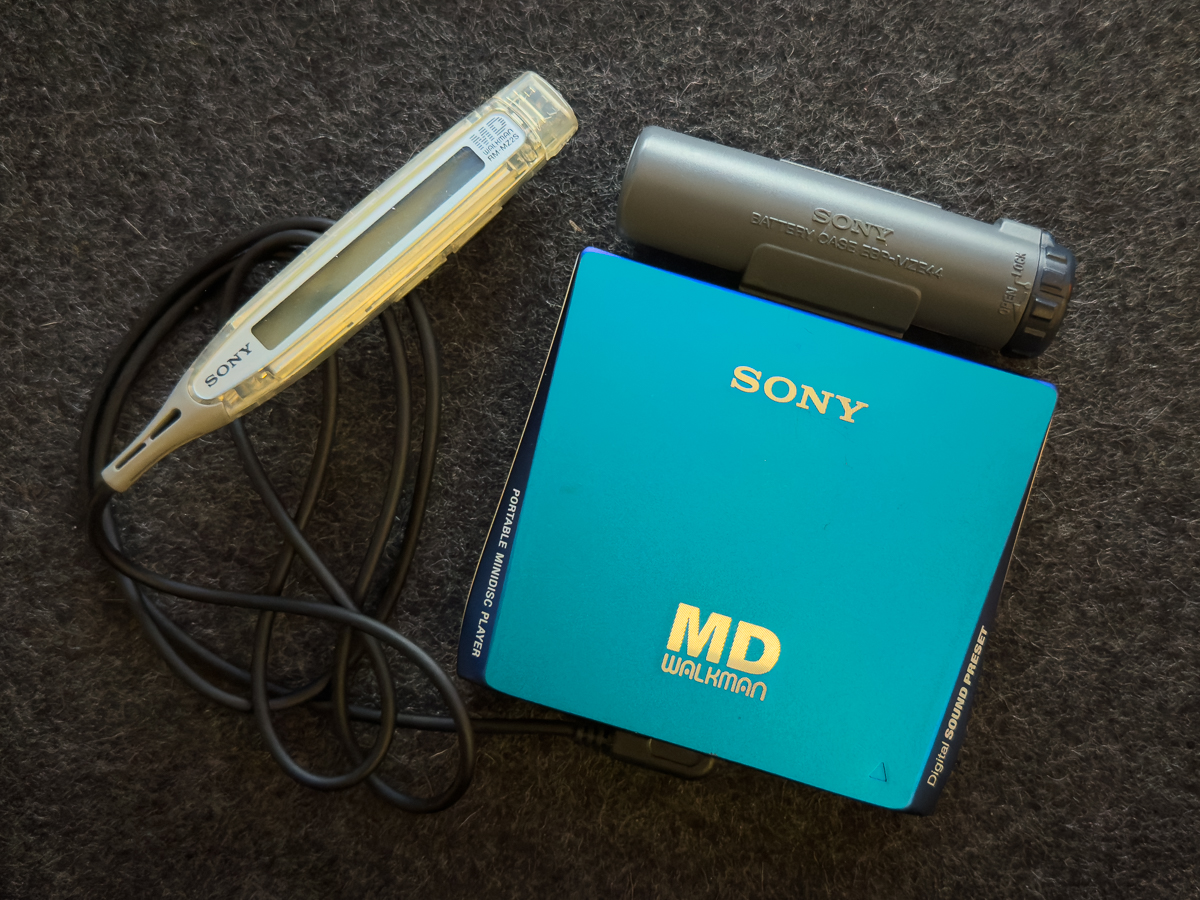
My Sony MZ-E75 was part of my everyday carry back in 2000/2001. Then sometime in 2002/2003, I packed light and headed for LA, and my MiniDisc decks landed in a box in the closet of my parents’ house in Boston.
Fast-forward to a few months ago. My mom sold the house and told me to come get any of my stuff that I did not want to end up in a dumpster.
I pulled out this deck, hit the eject button a few times, and immediately felt the old little thrill of it. Not nostalgia exactly, or at least not only nostalgia. More like recognition. The mechanism still felt good. The size still made sense. The whole object still had that compact, purposeful Sony confidence that made late-90s electronics feel like props from a better timeline.
I was not ready to part with it. Into the box it went, and a few weeks later I had all my MiniDisc gear back at my home base in Los Angeles.
At first I thought I was rescuing old gear for a quick hit of memory. Maybe I would listen to some tracks I recorded 20 years ago, smile at whatever past version of me thought belonged on a disc, and put everything back on a shelf.
What surprised me was how modern the format still felt. MiniDisc sits in a strange middle place: physical enough to slow you down, digital enough to edit, small enough to carry, and weird enough to make streaming feel less inevitable than it usually does.
The point is not that MiniDisc sounds better than everything else. I am not trying to win an argument on a message board. The point is that the whole interaction makes music feel chosen again.
MiniDisc has the best kind of format contradiction. It is physical media that behaves like digital media. You hold it, label it, eject it, stack it, and lose it in a drawer. But you can also edit it, rewrite it, sequence it, and move files onto it from a computer. It gives you a finite object without trapping you entirely in analog ritual.
That is why it still feels useful after streaming won. Streaming made music infinite and frictionless, which is extraordinary and something I use constantly. But infinite libraries have a way of turning every choice into a maybe. MiniDisc pushes back by making the unit of attention smaller and more deliberate. One album. One mix. One little square of plastic that has to be prepared before it can be carried.
This is the same useful friction I wrote about later in Friction Is About to Become a Luxury: not friction that wastes time, but friction that makes the choice feel deliberate.
Once the gear was back in my apartment, all it took was some time off from work between Christmas and New Year’s for me to go fully down the rabbit hole. I found the current r/minidisc community, the MiniDisc wiki, and a whole group of people who had kept the format from becoming only a museum object.
That mattered because my old gear was pre-NetMD. It could play and record, but it could not easily move music from a modern computer over USB. So I found a Sony MZ-N510, one of the NetMD-era players that could bridge the old format back to a current workflow.
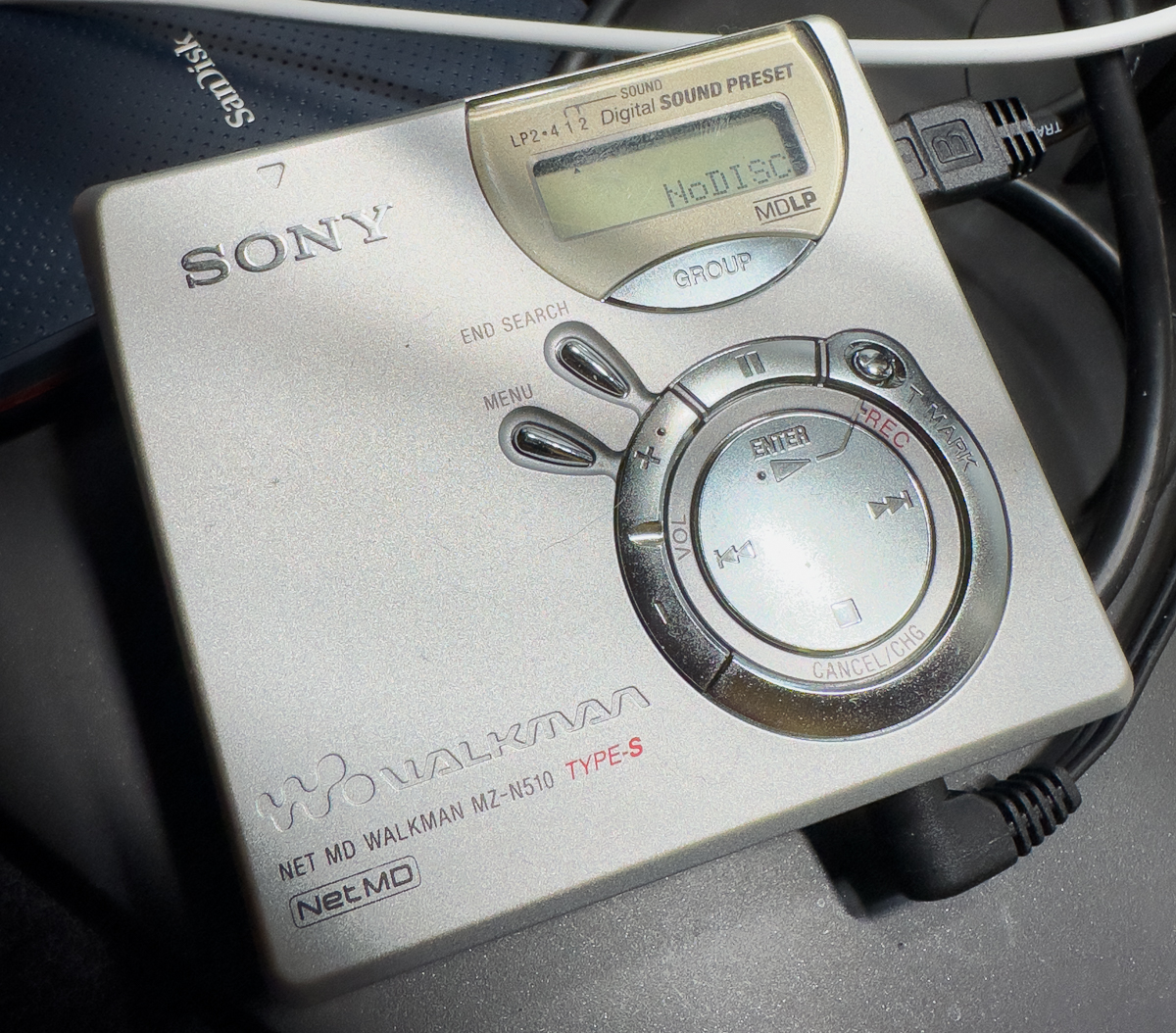
I always wanted vinyl to work on me. I liked the idea of putting on an album and letting the format enforce attention. But vinyl never quite became my thing. MiniDisc did, because it gives me the ritual without turning the whole room into a listening shrine.
It is album-scale attention in a pocket-sized object. That is the cyberpunk part.
On a rainy afternoon right before Christmas, the NetMD deck came in the mail. I stayed up too late for the next few nights converting blank media into a stack of full-length albums. This is where the living community made the format practical instead of merely charming. I did not need to recreate a Windows XP machine or pretend this was 2001 again. Modern tools had quietly filled the gap.
I started with, and still prefer, Platinum MD, although it can be a bit buggy. Web MiniDisc Pro seems more solid in actual use, though part of me still wishes it were packaged as a native app. Either way, the important thing is that the old Sony hardware is not stranded. A format that should have been orphaned now has web tools, desktop apps, documentation, repair notes, transfer guides, and people still making it work because the object is worth the trouble.
That is the difference between nostalgia and infrastructure. Nostalgia is remembering that something was good. Infrastructure is making it usable again.
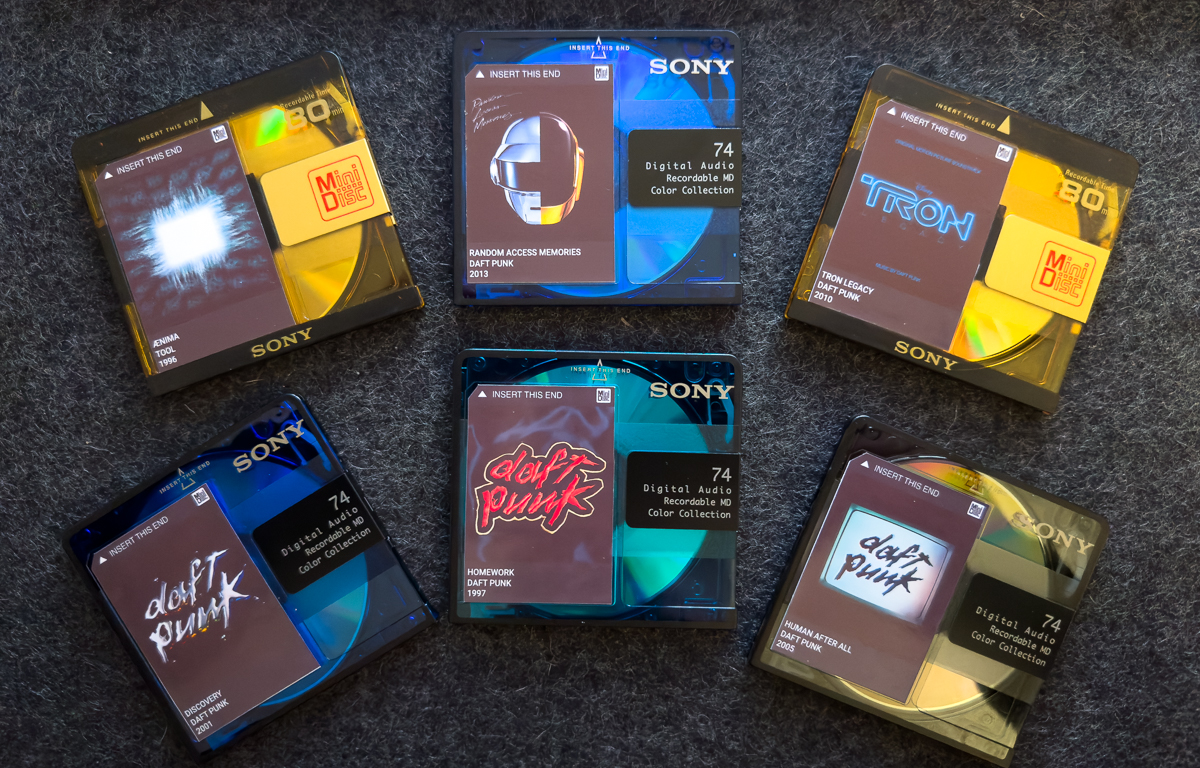
After the transfers, I had a stack of MiniDiscs. The next step was labeling them, which sounds cosmetic until you do it. A FLAC transfer is data movement. A printed label turns the disc back into an object.
The subreddit and wiki are full of resources for every part of this, including some very nicely designed labels. Using u/mikojank’s template as the base, I made a slightly modified version for printing on 8.5“ x 11“ sheets.
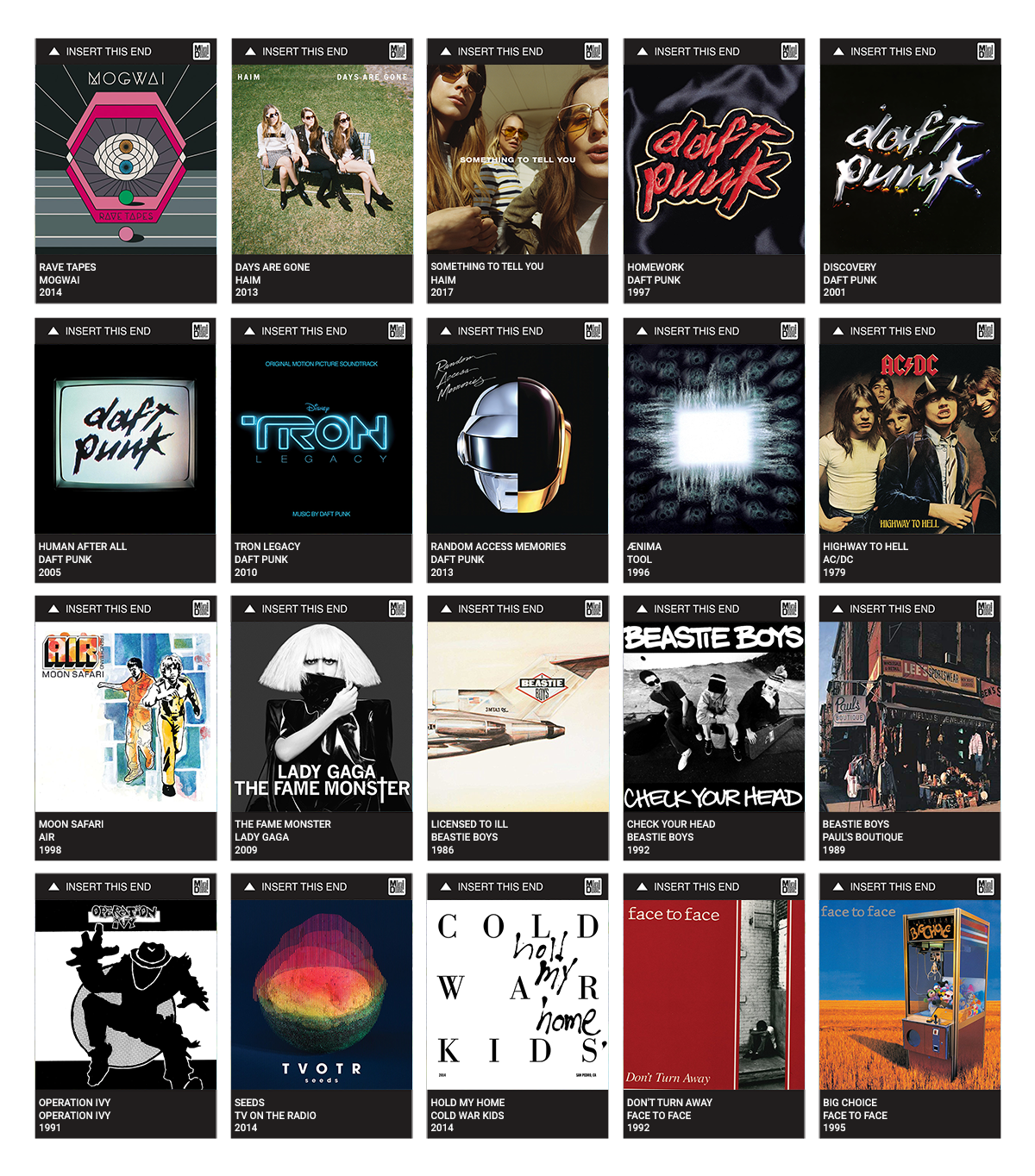
For best results, print at 100% on sticky 8.5“ x 11“ high glossy photo paper and cut the labels with an X-Acto knife and a ruler. Scissors will be tough at this size, trust me.
The labels were not decoration. They were the moment the files became albums again. You make a small design decision, print it, trim it, line it up, and suddenly the music has a front door. You can recognize it from across the table. You can hand it to someone. You can put it in a case. You can build a tiny library that does not require an account, a subscription, a recommendation engine, or a search field.
After an initial run of 27 discs, my original supply was exhausted. With just a bit of scouring and some late-night internal debate, I created an account on amazon.co.jp and ordered the last two 10-packs of the Sony color multipacks I could find. I also grabbed one very fun 30th anniversary disc from NeedleJuice Records.
Those might be the last MiniDiscs I ever buy. Maybe that is part of the appeal. The format is finite now. The machines are finite. The blank media is finite. Every disc feels a little more chosen because the whole thing is no longer pretending to be endless.
Streaming won because it is easier, cheaper, and functionally infinite. I am not trying to live in 2001.
But MiniDisc still gets one thing right. It makes music feel handled again. Chosen. Sequenced. Labeled. Ejected. Carried.
Not better than the future.
Just a version of the future I still wish had survived.