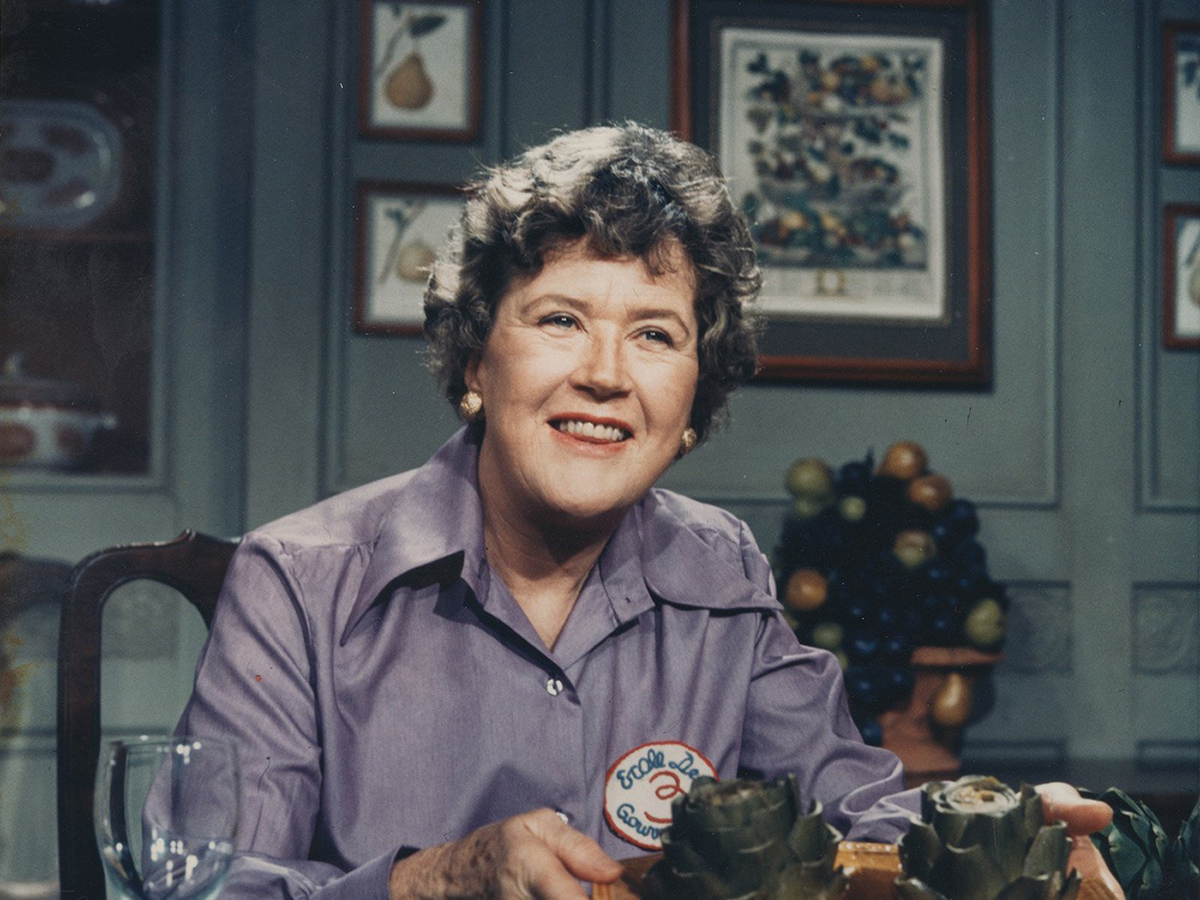
 Photo: Schlesinger Library, Radcliffe Institute, Harvard University
When I was little, the TV was always set to PBS for Sesame Street. I cannot recall a single specific Sesame Street episode, which feels like a small betrayal of childhood, but I do remember what happened after it ended. The French Chef would come on, and suddenly the bright, soft world of kids’ television gave way to this very tall, very funny, very confident adult moving around a kitchen like she owned every inch of it.
I was mesmerized.
Every knife cut, every shift of the pan, every reach for a bowl or bottle had this wonderful combination of skill and looseness. She clearly knew exactly what she was doing, but it never felt stiff or precious. It felt alive. Even when something looked improvised, it never felt like panic. It felt like the dish had simply taken a turn and she knew how to follow it.
That may be the thing I responded to first, even before I had any idea what she was actually making. She made cooking look like authority without anxiety. No matter what happened, because of the confidence and control she brought to the room, it seemed as if it was meant to be that way.
Not until I was older did I realize that one of my favorite parts of watching her cook was the wine. When a dish called for red wine, Julia would add some to the pot and then fill a waiting glass for herself. That detail explains a lot of what I love about her. The technique mattered. The food mattered. But the pleasure mattered too. She could be serious about cooking without turning it into a joyless little test of discipline.
She showed me the joy of cooking, especially cooking for other people. Not the performance of being impressive, not the fantasy of getting everything exactly right, but the warmer and more useful thing: making something, feeding someone, adjusting as you go, and refusing to be ruined by the parts that do not behave.
“The only real stumbling block is fear of failure. In cooking you’ve got to have a what-the-hell attitude.”
That quote feels like the whole lesson. Cooking for other people requires confidence, but not the fake kind where you pretend nothing can go wrong. It requires generosity, appetite, and a tolerance for mess. It asks you to care deeply and still keep moving when the sauce breaks, the timing slips, or the thing in the pan does not match the thing in your head.
I was determined to learn how to cook, but the real goal was to learn how to do it fearlessly, the way Julia seemed to. I wanted that looseness. I wanted the ability to recover. I wanted to be the kind of person who could put food on the table without making everyone else nervous about whether I was succeeding.
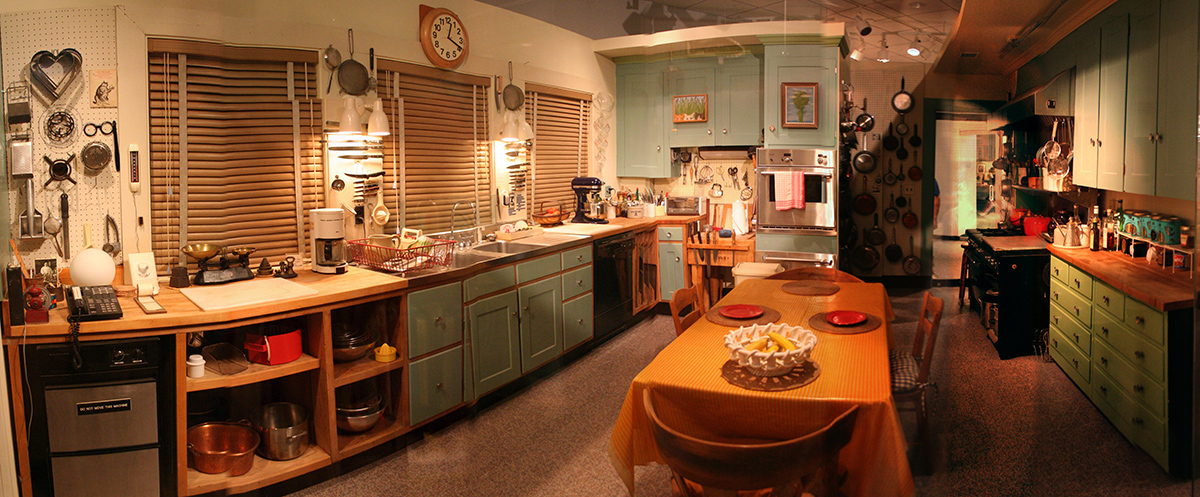 Julia Child's Kitchen on display at the National Museum of American History
“You don’t have to cook fancy or complicated masterpieces - just good food from fresh ingredients.”
At some point, four-year-old me was probably watching more The French Chef than Sesame Street. When adults asked what I wanted to be when I grew up, I had an answer ready: a chef.
I did not have the vocabulary for it then. I just knew that whatever she was doing looked like a good way to be alive. There was food, yes, but also confidence, comedy, appetite, skill, and the faint possibility that an adult could make a mess on television and still be completely in command.
Looking up her quotes later, I found one about her first meal in France that made me love her even more:
“The whole experience was an opening up of the soul and spirit for me…I was hooked, and for life, as it turned out.”
That is what I recognized watching her, even before I had the words for it. Food could open a door. Cooking could be skill, appetite, generosity, and theatre all at once. You could take it seriously without being precious about it. You could have a what-the-hell attitude and still care deeply about doing it well.