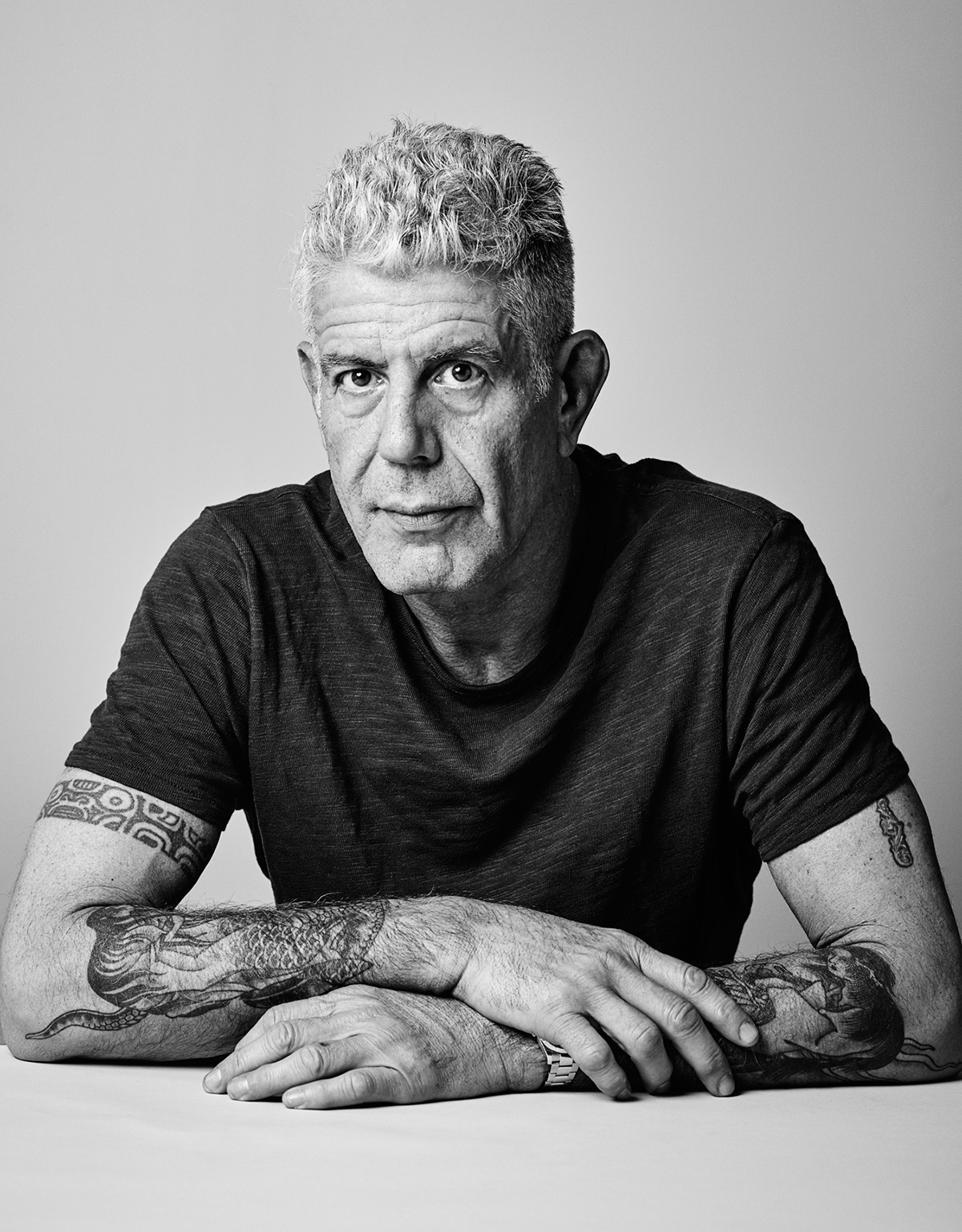
 Photo Credit: Christopher Sturman
“I understand there’s a guy inside me who wants to lay in bed, smoke weed all day, and watch cartoons and old movies. My whole life is a series of stratagems to avoid, and outwit, that guy.”
I wanted to start a series of posts about the people who have influenced me, and Anthony Bourdain feels like the right place to begin.
Not because he was the most important person in my life, or because I need to make some grand claim about his place in culture. He mattered to me because he made curiosity feel active and physical. It was not an abstract virtue. It was something you practiced by leaving the house, getting on the plane, walking into the room, sitting at the bar, ordering the thing you did not quite understand, and paying attention.
A little over a decade ago, I used to exist almost entirely within a few square miles of Culver City, CA. I had my coffee place, my lunch spots, my bars, my home, and my office all inside a tiny radius. It was comfortable. It felt complete. I had convinced myself that all the best stuff I needed was already there, wrapped around me in a small, familiar loop.
Then I started watching No Reservations religiously, and that little loop started to feel small.
Bourdain opened up the world through my favorite common denominator: food. Not food as luxury, or as a list of reservations to brag about, or as some polished lifestyle accessory. Food as a way into a place. Food as work, history, appetite, hospitality, pride, survival, pleasure, and occasionally danger. He made the world feel reachable, not because travel was easy, but because the first move was so simple: show up hungry and be willing to listen.
Bourdain isn’t the reason my passport went from a pristine booklet of untouched pages into a tattered mess of fading stamps, but he did get me excited about each one of those journeys.
That is the part that stuck. When I go to a new city or country, I try to find at least one place where I could picture Tony sitting down for a meal. Not the obvious place. Not the room built for people passing through with cameras and expense accounts. I mean the local room. The place that might be a little intimidating at first. The place where people are actually eating, drinking, talking, and getting on with their lives.
That became a method for me. Find the bar. Find the counter. Find the place where the menu assumes you already know what you are doing, then be humble enough to admit that you do not. Let the meal teach you something before you start trying to summarize the city.
If I’m in a city that he documented, I also try to visit at least one place he’s been. It is partly sentimental, sure. But it is also a way of testing whether the room still has some of that charge in it: the smoke, the noise, the older regulars, the bartender who has seen every kind of person walk through the door, the feeling that you are briefly connected to a larger conversation.
Le Royal, Paris, 2005
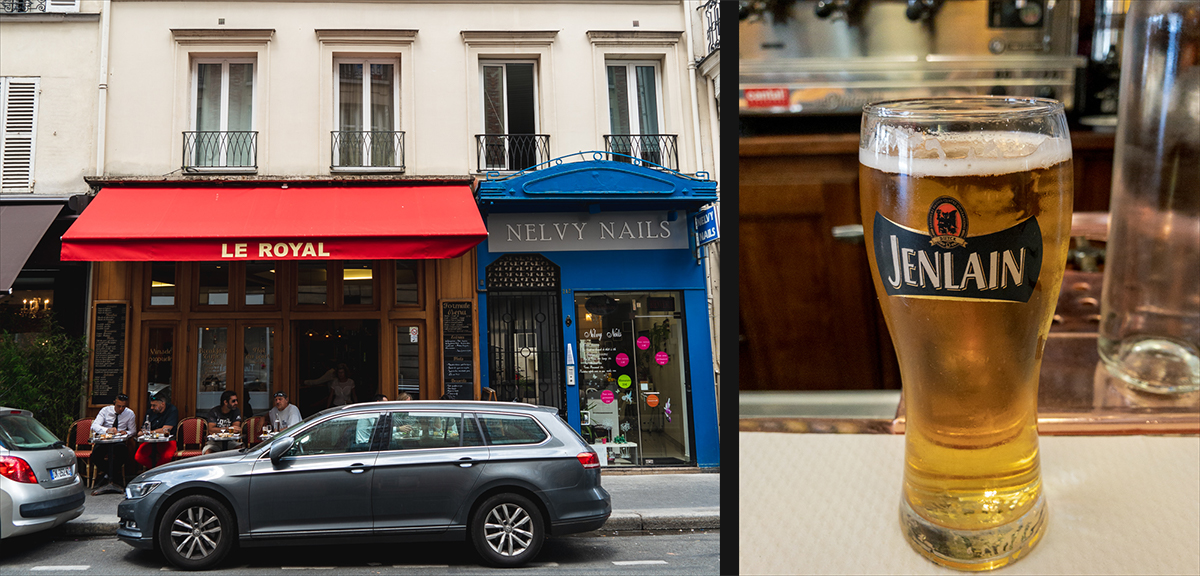 Le Royal, Paris, 2018
Kitchen Confidential
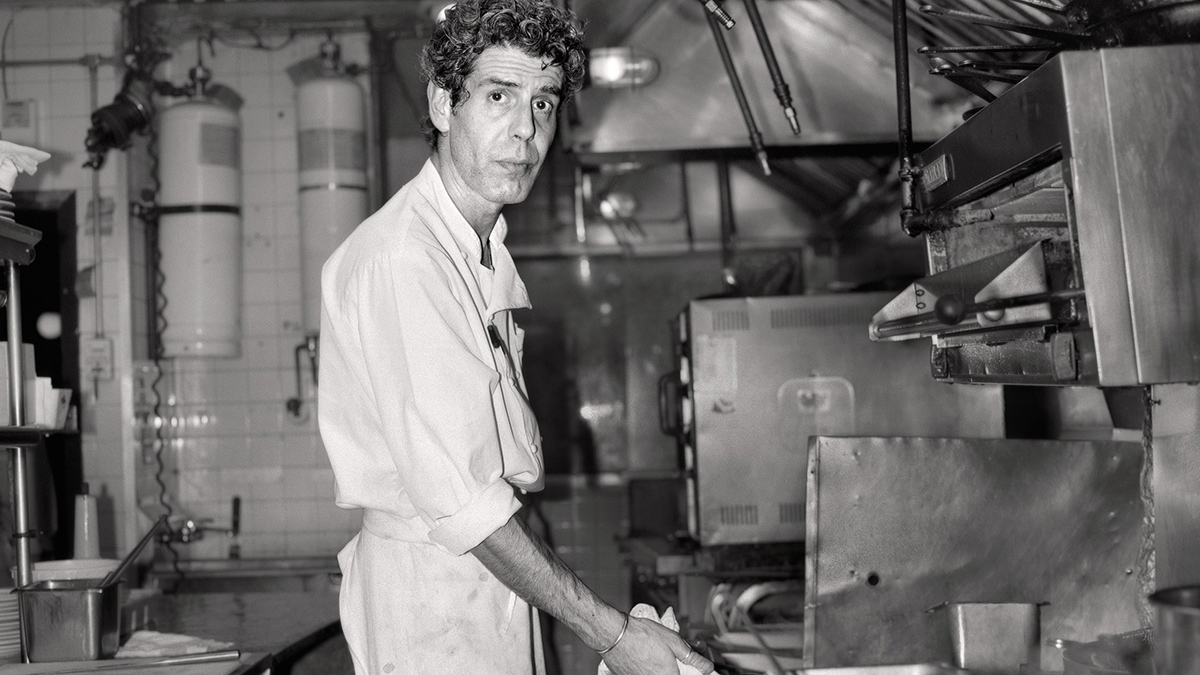 Photo Credit: Martin Schoeller
“I’ve long believed that good food, good eating, is all about risk. Whether we’re talking about unpasteurized Stilton, raw oysters or working for organized crime ‘associates,’ food, for me, has always been an adventure”
Superfan or not, I didn’t realize until recently that the audiobook of Kitchen Confidential is narrated by Tony himself. That matters. You do not just get the words. You get the timing, the drag in his voice, the little stabs of humor, the weariness, the specificity. He knew exactly which lines were jokes, which ones were confessions, and which ones were meant to land like a thrown pan.
In the weird and challenging times we find ourselves in now, hearing his voice takes me back to a time of both optimism and possibility, a place I hope we can all get back to soon.
“To me, life without veal stock, pork fat, sausage, organ meat, demi-glace, or even stinky cheese is a life not worth living.”
That appetite was part of the lesson too. Bourdain could be sharp, impatient, profane, and unfair, but he never made pleasure feel small. He treated eating seriously without turning it into manners class. The point was not refinement. The point was to stay open to the world, even when the world came at you greasy, loud, strange, and stronger than expected.
The book also shows how much respect he had for the people who taught him, showed him the light, gave him a second chance, and kept showing up. He admired talent, but he seemed to revere reliability even more: the hard workers, the people who never called in sick, the people who did what they said they would do.
Kitchen Confidential helped him leave the kitchen as a job, or at least made that departure possible. It did not soften him, and it did not turn him into someone else. It gave him a larger room to work in. Since his death, I have often wondered which environment was more brutal: the kitchen that formed him, or the endless travel and loss of anonymity that came after.
RIP Tony
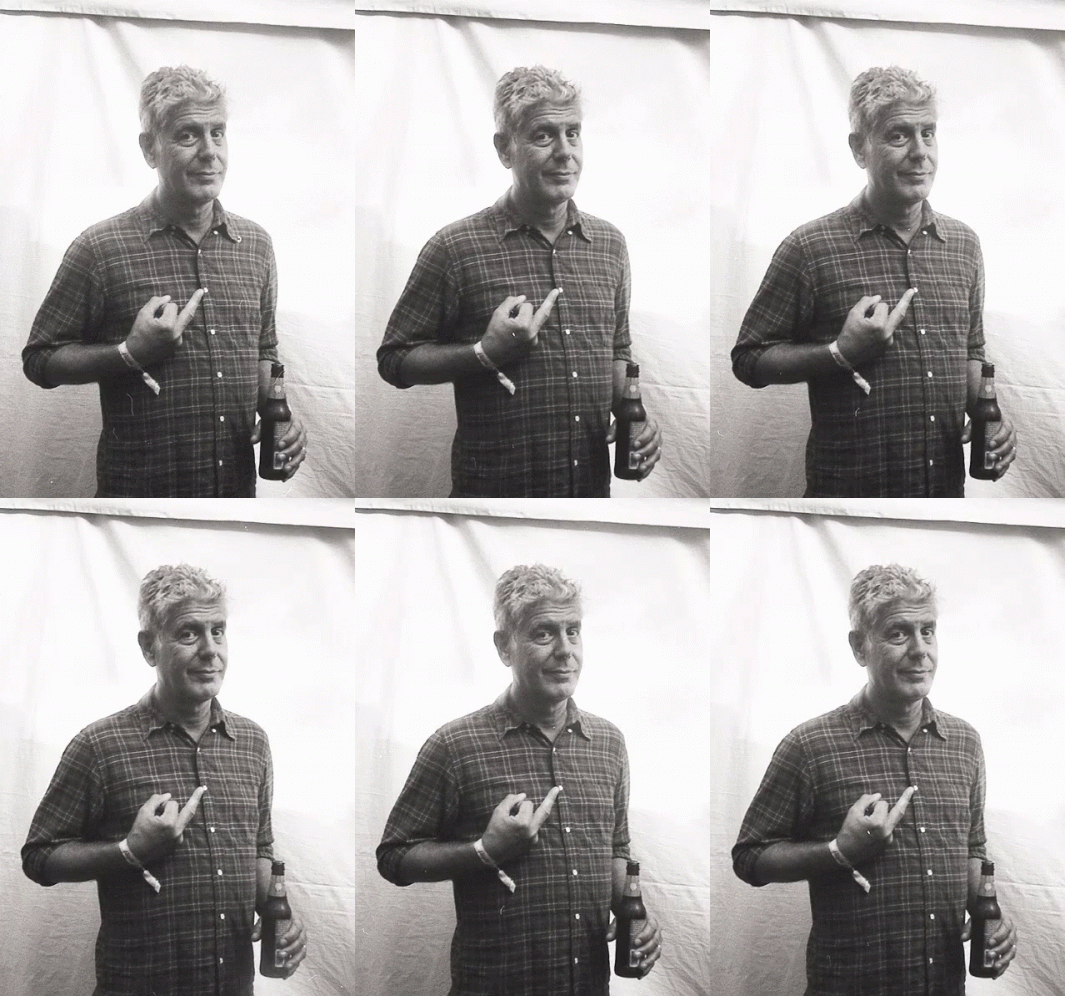
I miss this guy a lot. It is not often a day goes by that I do not think about him.
I find myself wondering what his takes on the present-day world would be, especially with regard to some of the most damaged industries: travel and food. In 2020, that question feels less like nostalgia and more like an absence. He spent so much of his work showing how much life was carried by cooks, servers, markets, bars, hotels, drivers, strangers, and crowded rooms. So many of those rooms are hurting now.
I do not know what happened to him toward the end. I do not want to pretend I do, and I do not want to turn his death into a theory. I just wish he could have been helped. I wish he had not had to carry whatever pain he was feeling alone. That is a simple thing to say and an impossible thing to fix after the fact.
I know for sure, though, that I will carry his inspiration with me always, and my son will know his name and the lessons he taught.
Most importantly, I hope he learns that something as ordinary as a meal together can carry a lot of weight. It can teach history. It can cross distance. It can make a strange place less strange without sanding away what makes it different. It can put people at the same table long enough to find common ground, and maybe even love.