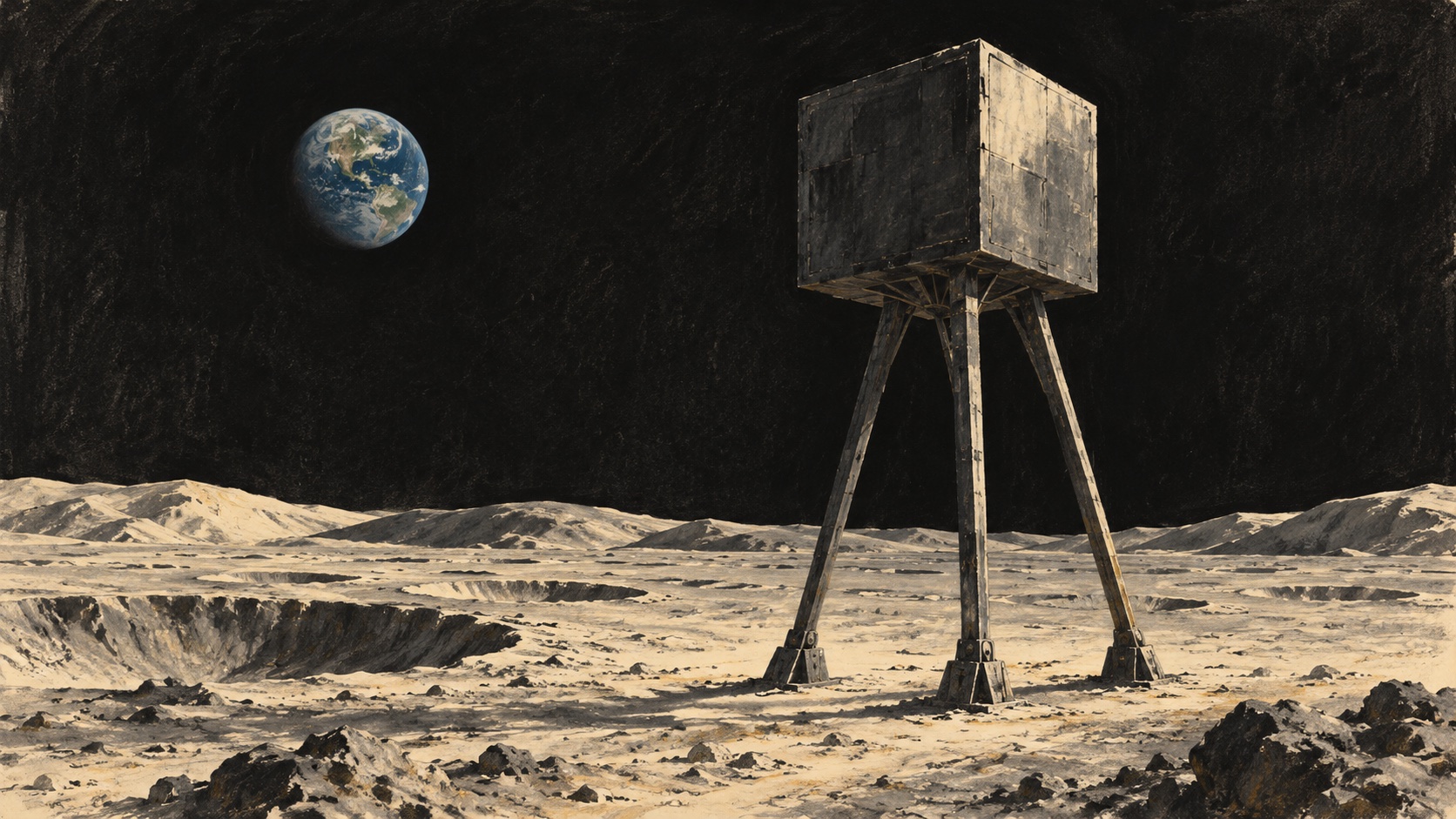
John Lear was my favorite guest on Art Bell’s Coast to Coast AM. He believed aliens had helped create humans, that the government had agreed to let them abduct people, and that a machine on the moon collected souls after death.
He also came to believe that the public should not be told the full story. After years of arguing that people deserved to know, he decided they had little idea what they were asking to learn.
His reasons involved almost everything he believed about the visitors, the government, and what humans were for.
Aircraft and their occupants
Lear was the son of Bill Lear, the inventor associated with the Learjet, and a commercial pilot himself. He discussed unusual aircraft in terms of propulsion, flight characteristics, and test schedules.
Bob Lazar said he had worked on recovered alien craft at a facility called S-4 in Nevada. Lear described meeting him through Gene Huff, who had come to appraise Lear’s house and brought Lazar along to help with the measuring. According to Lear, Lazar was initially dismissive of his UFO interests. Later, he arrived at Lear’s home and told him he had seen a disc himself.
Lear also described going into the desert with Lazar and Huff to watch a test flight. He struggled to focus an eight-inch telescope, finally saw a glowing disc, and then bumped the tripod as he stepped aside to let Huff look.
Lear believed many kinds of aliens were visiting Earth. Some were friendly, some hostile, and many indifferent. He described the little gray beings associated with abductions as manufactured organisms working for others whose identities and purposes remained unknown.
Technology in exchange for abductions
Lear outlined the government’s involvement in a statement he began circulating in December 1987. In the August 1988 revision preserved by UFOmind, he described a secret group called MJ-12 negotiating with extraterrestrials. The government would tolerate abductions in exchange for advanced technology, with the aliens supplying lists of the people taken.
According to Lear, the aliens took far more people than they reported. The technology was less useful than officials expected, too. They could not operate the equipment independently or use it against its makers.
At Dulce, an underground facility he described near the Colorado–New Mexico border, humans and aliens conducted genetic experiments together. Lear said a deadly confrontation began after a security officer entered an area carrying a conventional weapon. The aliens killed the officer, and other security personnel went in after him. Lear described heavy losses among the humans.
In Lear’s account, the government could keep secrets from its own population but could not enforce its agreement with the visitors. Officials continued the cover-up partly to conceal the consequences of their own decisions.
Abductions and human origins
Lear said Budd Hopkins’s Missing Time and Whitley Strieber’s Communion frightened him. He visited Hopkins and listened to recordings of people describing abductions. Partway through, he asked Hopkins how he could live with hearing these accounts. Hopkins told him he got used to it.
His explanation for the abductions was that humanity was an ongoing experiment. The visitors were checking on something they had made.
Lear attributed this idea to documents Lazar said he had read. Humans had undergone 65 separate genetic corrections and were referred to as “containers.” Lear considered several possibilities for what the containers held, including biological substances, before concentrating on the soul.
Lear connected religion to the same experiment. He believed the beings responsible had introduced religious teachings and demonstrations of miraculous power to give humans rules to live by. Those rules helped keep people from harming one another while the experiment continued.
He said he did not know the experiment’s ultimate purpose or whether it was succeeding.
The machine on the moon
By 2004, Lear had an explanation for how souls moved between lives. Richard Hoagland’s interpretation of lunar imagery had drawn his attention to a tall structure with a large cube at the top, facing Earth. Lear believed it was an antenna for receiving and transmitting souls.
In his explanation, the machine received a soul when a person died and transmitted one when a person was born. He also believed that most people could not access memories of previous lives, preventing them from consciously using what they had learned before.
He suggested that people who died underwater could become lost souls because the machinery could not retrieve them.
Lear also believed the moon had been brought into its present position. It housed the equipment he thought was managing human souls.
Secrecy and public expectations
Lear believed the organization managing alien information withheld it even from presidents and other elected officials. Politicians came and went. The people running the operation stayed.
He believed information from space missions was altered before it reached the public. Images concealed lunar structures, and official accounts misrepresented conditions on other planets. He described Venus as inhabited and much more like Earth than people had been told.
He described E.T. and Close Encounters of the Third Kind as part of an effort to prepare people for contact by showing them friendly aliens.
Lear believed the public was being encouraged to expect friendly visitors while officials were discovering that the aliens would not honor their agreement.
Why he came to oppose disclosure
By the time Lear was arguing against disclosure, the information he wanted withheld included human origins, the purpose of religion, and government participation in abductions. An announcement would tell people that they had been made for reasons they did not understand and that institutions they trusted had helped conceal it.
He wrote a hypothetical government briefing to explain his position. The recipient would be shown the entire history, including the government’s involvement, and then asked whether it should all be released. Lear wanted people to consider the contents of the announcement before deciding that they were ready for it.
Lear distinguished between discussing these ideas publicly and having them officially confirmed. People could hear his account and go about their lives. A government announcement would make the information harder to dismiss.
Lear thought the effect on religious believers would be particularly severe. In his account, the beings people might have understood as gods were conducting an experiment, and the humans involved did not know its purpose. He believed that officially confirming this would cause more harm than continuing to withhold it.