I stayed up way too late last night. Claude got added to Xcode, and before I knew it I was three hours deep into refactoring four old app projects I’d almost abandoned. I was returning to things I’d walked away from months ago because the coding problems that stopped me had become easier to solve. That’s the part about this moment that’s hard to explain. It’s not just that AI makes new things possible. It’s that it makes everything feel urgent again.
Something shifted in the last couple of months. Coding agents became much more useful to me. Tasks that would have taken a weekend now take 30 minutes. You describe what you want in plain English, an agent goes off and builds it, runs into problems, solves them, and comes back with a working thing. That has changed how much I can attempt in an evening.
I’m finding that pace hard to sustain. When every idea is 30 minutes from existing, you never run out of reasons to stay up. I’ve been subjecting mine to it for weeks now, and I’m restless even when I stop working. It’s hard to sit still or sleep when I keep thinking of another thing to try. My Apple Watch started flagging some health concerns a few months back, which was its own kind of wake-up call. I’ve since lost weight and closed my exercise ring every day for the past three months, something I should have prioritized a long time ago. I’m watching what I eat. I’m getting healthier, but I’m still having trouble switching off.
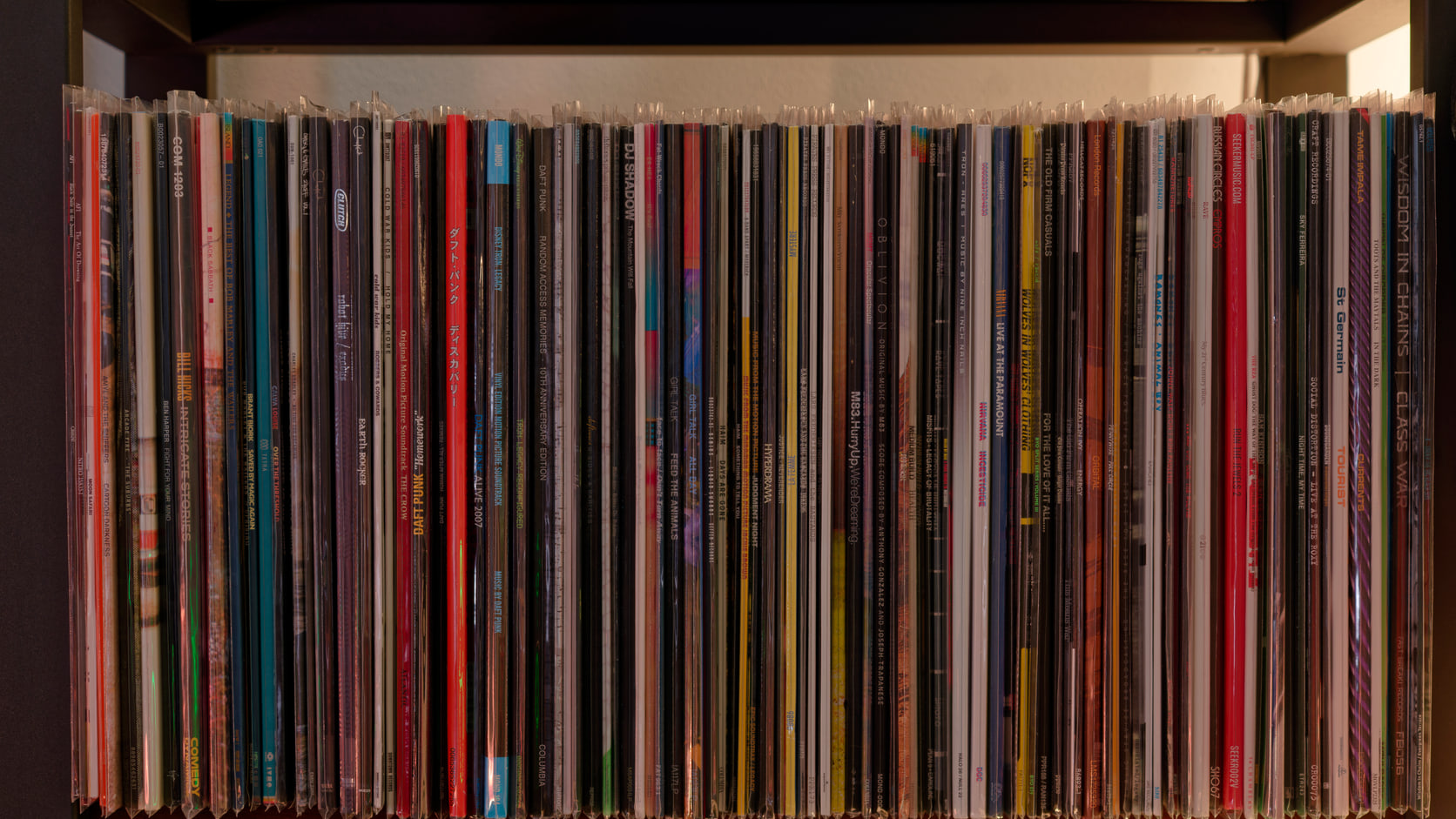
Here’s what I’ve noticed, though. Over the past year, I’ve bought more vinyl records, 4K Blu-rays, physical books, and comics than I have in the past decade combined. The pace has been accelerating alongside everything else. At first I didn’t think much of it. Then I realized what I was doing.
I was choosing activities that would make me slow down.
A vinyl record takes about 20 minutes a side. You put it on, you sit with it, you don’t skip tracks. A 4K disc means committing to a movie from opening titles to end credits. A book requires hours. These formats encourage me to stay with one thing. I could skip a track or stop a film, but I’m less inclined to do that than I am to switch between tasks on a screen.
The irony isn’t lost on me. I’ve used AI to build custom tools that track all of these analogue collections. Vinyl, comics, films, books, each with its own little web app, each connected to APIs and LLMs so I can interact with my shelves in new ways. The apps make it easier to use the collections. I enjoy building them, and I also need time away from building anything.
I’m not going to stop using these tools. They’re too powerful, too useful, too genuinely exciting. Last night’s Xcode session was thrilling in a way that programming hasn’t felt in years. But I need a way to stop, even when I’m excited. Otherwise I keep starting things and give myself very little time to enjoy them.
This morning I made an espresso, put on a record, and sat in the garage for 20 minutes before opening my laptop. For those 20 minutes, I just listened.
That felt like the most important thing I did all day.