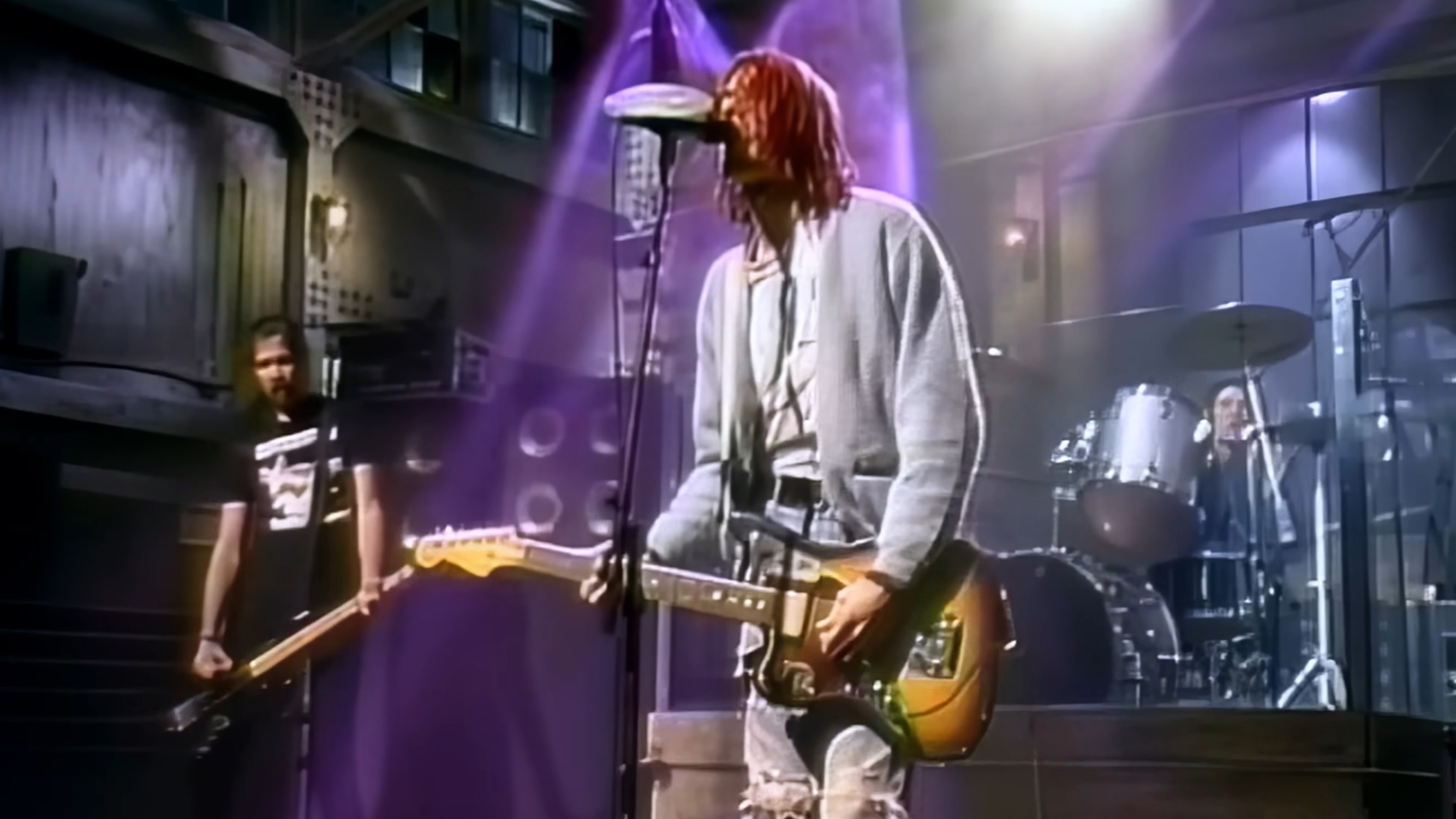
I remember the first time I heard Nirvana. I was 10 or 11 and I caught maybe a 20-second clip of their performance on SNL. I had never heard anything like it and something instantly clicked. I remember jumping off the furniture in my parents’ living room when the bridge hit the chorus and the guitar went from clean to distortion. When I bought my first guitar, that was the first sound I tried to re-create. First learning about distortion, then power chords. I was a giant Nirvana fan. I listened to them, and then anyone in their orbit, on repeat. I raided my Dad’s closet for flannel shirts and old cardigans.
When the news came out that Kurt had died, my world crumbled. I was thirteen.
Soon after, I remember reading Never Fade Away, which carried the official story. But it wasn’t long before things started coming out that cast doubt on the whole thing. The suicide note reading more like an exit from the music industry, with the last paragraph, the part that actually reads as a suicide note, appearing in different handwriting. The amount of heroin in his bloodstream. How I felt about Courtney Love and her influence on him. None of it added up.
In a lot of ways, what’s making news this week feels like a long time coming. Last November, the International Journal of Forensic Sciences published “A Multidisciplinary Analysis of the Kurt Cobain Death” by forensic scientist Bryan R. Burnett and six co-authors from the U.S. and Italy. The paper landed quietly at first, but this week it broke wide after the Daily Mail ran an extensive feature with interviews from researcher Michelle Wilkins, triggering coverage across outlets from Euronews to Vice. SPD and the King County Medical Examiner both issued fresh statements in response. Their conclusion, based solely on publicly available evidence: Kurt Cobain was a homicide victim. His body was moved from the site of the killing and staged to appear as a suicide. This isn’t a Reddit thread or a YouTube deep dive. It’s a peer-reviewed forensic analysis. And the evidence it presents is difficult to dismiss.
The Shotgun Problem
Cobain’s weapon was a Remington M11 Sportsman 20-gauge shotgun with a Cutts compensator on its muzzle. According to the police report, his left hand was found gripping the barrel near the compensator. The researchers obtained an identical M11 and fired over 30 rounds while gripping the barrel in the same position described by investigators. Not once did the spent casing successfully eject. The M11 uses a long recoil process where the barrel recedes into the receiver. Any obstruction, like a hand gripping the barrel, prevents the casing from clearing. Yet at the scene, the spent casing was found ejected, sitting on a jacket next to the body. If Cobain was holding the barrel when the gun went off, that casing should have been stuck in the receiver.
Then there’s the blood. Backspatter from a contact shotgun wound to the head is well documented in forensic literature. Blood was found inside the dorsal (top-side) compensator vents and on the dorsal barrel surface, meaning the gun was trigger-down when it fired. But when investigators found the body, the shotgun was trigger-up. The gun had been flipped. And Cobain’s left hand, the one allegedly gripping the barrel near his mouth at discharge, showed no blood spatter at all. If his hand had been there when the gun went off, it would have been covered.
The Heroin Problem
Cobain’s blood morphine level was 1.52 mg/L. The researchers note this is significantly higher than what’s typically seen in fatal overdoses, even among the most tolerant users. Heroin administered intravenously reaches peak plasma concentration in roughly thirty seconds, producing a rush of euphoria followed almost immediately by heavy sedation. The suicide scenario requires that after injecting this dose, Cobain remained functional long enough to recap his syringe, store it back in his cigar box, move across the room, position a nearly four-foot-long shotgun in his mouth, and pull the trigger. Given what we know about heroin pharmacology, the researchers argue this sequence is essentially impossible.
Even more striking, the injection site on Cobain’s left forearm showed a circular impression consistent with a collared syringe, the kind used for intramuscular injection with higher-volume capacity. The syringes found in Cobain’s cigar box were insulin-type, with fixed needles and no collar. A different syringe was used for the lethal dose. And Cobain was left-handed. All his other track marks were on his right arm, consistent with a left-handed user injecting himself. The fatal dose went into his left, dominant arm, a site he wouldn’t typically use on himself.
The Body Was Moved
The paper’s most unsettling argument is that Cobain’s body was carried to where it was found. Blood from his mouth, nose, and ear canal had soaked into his shirts, but if he’d been lying on his back the entire time, that blood would have flowed sideways onto the floor, not down onto his chest. The bloodstain pattern is consistent with his upper body being lifted, his head tilting forward, and blood flowing onto his clothing during transport. Three layers of clothing under his jeans had been pushed up from his lower legs to his thighs on the right side, consistent with someone carrying him by the legs upward, like up the exterior stairs to the greenhouse.
A transfer bloodstain on his left lower pant leg, undetected until the researchers enhanced the original high-resolution crime scene photos in Photoshop, shows the pattern of a bloodied hand gripping his leg.
What Hasn’t Changed
It’s important to note what this paper is and isn’t. It’s a forensic analysis by independent researchers, published in a peer-reviewed journal. It is not a ruling by the Seattle Police Department or the King County Medical Examiner, both of whom still classify Cobain’s death as a suicide. SPD has said their position hasn’t changed. The ME’s office has said they stand by the original ruling but will consider compelling new evidence.
The paper also doesn’t name a suspect or establish motive. It stays within the boundaries of physical evidence, which is part of what makes it credible.
Thirty-One Years
I don’t know what happens next. Maybe nothing. Cold cases stay cold for all kinds of reasons, and institutions don’t easily reverse thirty-one-year-old determinations. But the physical evidence laid out in this paper, the casing that shouldn’t have ejected, the blood that’s on the wrong surfaces, the heroin dose that should have made self-inflicted violence impossible, the body that was clearly moved, none of it fits the story we were told in 1994.
Thirteen-year-old me knew something was wrong. The heroin levels. The note. The whole thing felt off, and I didn’t have the language for why. Thirty-one years later, a team of forensic researchers finally does. The evidence has been saying the same thing this whole time.